
01
Baraat
The groom arrives in a joyful wedding procession accompanied by family and friends with music and dancing. This celebration marks the groom’s journey to the wedding venue to marry his bride.
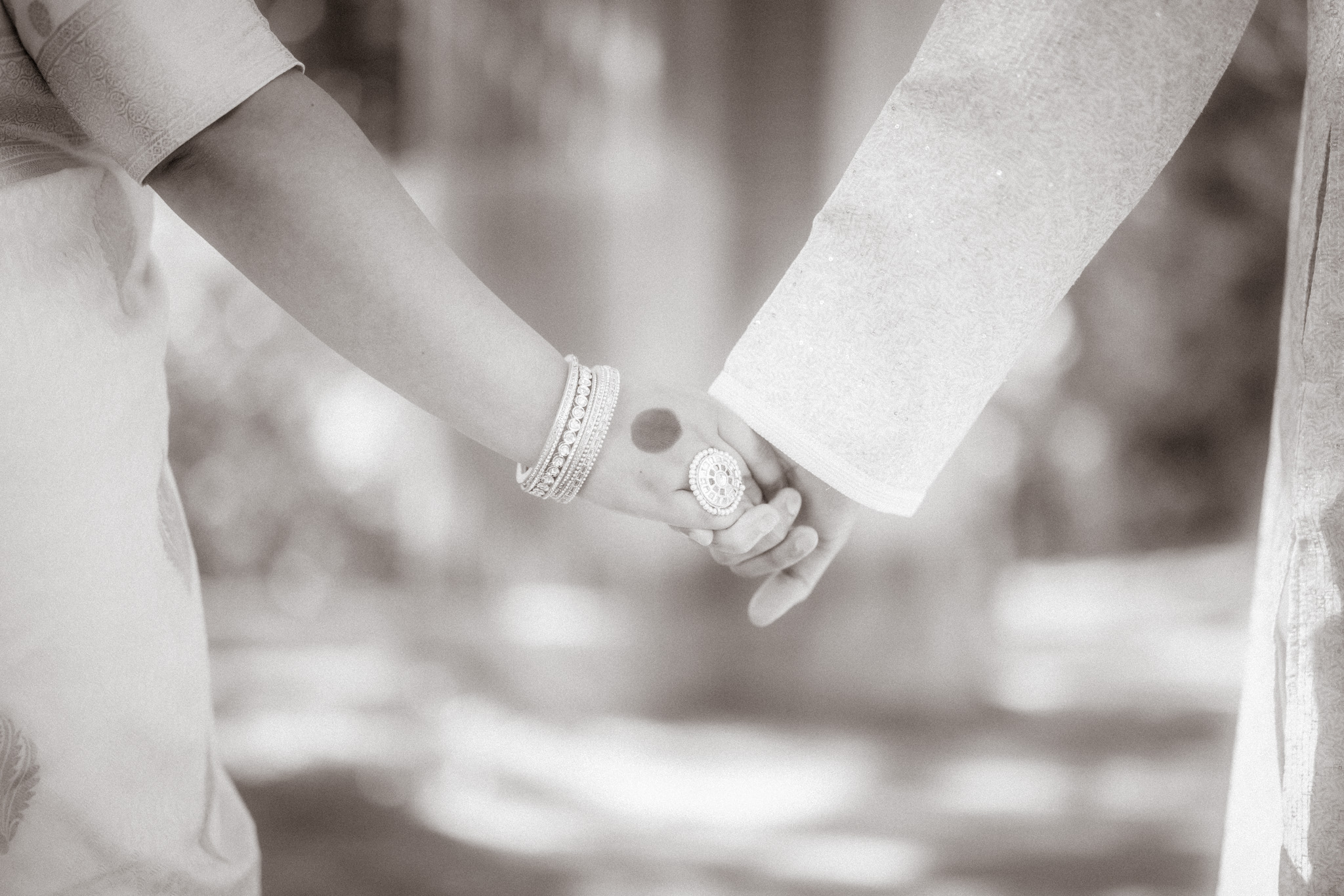
A little guide to the traditions and moments that will bring us from two families to one. We’re so happy to have you here with us as we celebrate, laugh, take our vows, and begin this next chapter together.
Steps 1–6
The groom arrives in a joyful wedding procession accompanied by family and friends with music and dancing. This celebration marks the groom’s journey to the wedding venue to marry his bride.

The bride’s family warmly welcomes the groom and his family. The groom is greeted with traditional rituals, blessings, and an aarti to symbolize respect, acceptance, and the joining of two families.

In this lighthearted tradition, the groom symbolically announces his intention to renounce worldly life and leave for Kashi (Varanasi) to pursue spiritual knowledge. The bride’s father lovingly persuades him to return and accept the responsibilities of married life by marrying his daughter.

Escorted by her loved ones, the bride makes her way to the mandap. An antarpat, a ceremonial cloth, is held between the bride and groom before they see one another. At the auspicious moment it is lowered, marking the beginning of the sacred marriage ceremony and the union of two families.

The bride and groom garland one another with fresh flowers, signifying the grand union of their families and the blending of traditions, values, and customs.

The bride and groom are seated on a beautifully decorated swing while family members gently rock them. Traditional songs are sung, and blessings are offered to symbolize balance, harmony, and support throughout married life.
Steps 7–14

The wedding ceremony begins with invocations to Lord Hayagreva and Lord Ganesha. The prayers purify and bless the bride and groom, avert obstacles, and seek wisdom, happiness, and prosperity for their life together.

Sacred water is blessed through Vedic prayers and used to purify the couple, their families, and the ceremonial space. The ritual prepares the mandap for the sacred rites that follow and invokes auspiciousness.

One of the most sacred rituals of the ceremony, the bride’s parents formally entrust their daughter to the groom. They offer their blessings and support as the couple begins their new life together.

The bride and groom’s hands are joined in a sacred gesture that symbolizes their formal union. With the blessings of their families and the divine, they accept one another as partners in married life.

The mangalsutra is blessed with prayers before it is later tied around the bride’s neck. The blessing invokes protection, prosperity, strength, and a happy married life for the couple.

Agni, the sacred fire, is invoked as a divine witness to the marriage. Offerings and prayers are made to the fire as the couple prepares to take their vows and begin their life together.

A ceremonial garland is placed on the couple, honouring them and blessing their union as they continue through the sacred wedding rites.

Ashrita (groom's sister) ties the bride and groom’s garments together in a sacred knot. The binding symbolizes two lives, two families, and two paths becoming joined in marriage.
Steps 15–19

The couple circles the sacred fire four times while making solemn vows to one another. The first three pheras are led by Ashish, and the final phera is led by Naviya. Together, the rounds represent love, trust, respect, prosperity, and lifelong companionship.

The bride and groom take seven symbolic steps together, with each step representing a shared promise, from nourishment and strength to love, family, friendship, and lifelong partnership. These seven vows complete the marriage.

The groom ties the mangalsutra, a sacred necklace, around the bride’s neck. This symbolizes their marital bond, lifelong commitment, and the blessings of a prosperous married life.

The groom applies sindoor, a sacred red vermilion, to the bride’s hair parting. The ritual is a traditional symbol of marriage and of the couple’s new life together.

The bride is draped with a ceremonial chunri as a blessing for her new chapter. The ritual symbolizes honour, protection, love, and her welcome into married life.
Steps 20–24

Five married women from each side bless the bride with prayers for a long, happy, and prosperous married life. This ritual symbolizes the wish that she enjoys enduring love, health, and marital happiness.

The couple is guided to view the stars Arundhati and Vashistha, who represent the ideal married couple in Hindu tradition. This ritual inspires the newlyweds to build a relationship based on devotion, equality, and mutual respect.

The bride, groom, two witnesses, and officiant sign the marriage license, officially registering the marriage according to civil law.

The couple shares kansar, a traditional sweet, and feeds one another. This first shared taste symbolizes sweetness, nourishment, care, and the joy they hope to carry into married life.

The bride bids an emotional farewell to her parents and family as she begins a new chapter with her husband. This touching tradition symbolizes love, gratitude, and the joining of two families.
#ASHiqbaNAViya